Shanghai's historic streets are often flattened into one visual idea: brick lanes, plane trees and European-looking facades. The official place histories show a more useful distinction. Xintiandi is a commercial adaptation of early twentieth-century shikumen. Tianzifang mixes stone-gate residences, courtyards, former small factories and artist studios. Nanchang Road includes lilong housing and Art Deco apartments. Wukang Road is known for multi-family buildings, modern lanes and detached garden villas in several architectural styles.
Learning four terms - shikumen, lilong, apartment and garden villa - makes a walk more accurate. It also discourages treating lived-in residential areas as open-air sets. Shanghai's heritage regulations define protected areas through architecture, street pattern and regional culture and say activation should respect local lifestyles. The feature below explains what to look for and how to compare districts without claiming that every old-looking facade is original or publicly accessible.
At a glance
Start here
- Shikumen describes a stone-gate house type; lilong describes the lane-based neighbourhood form more broadly.
- Xintiandi and Tianzifang are different models of adaptation, not interchangeable old towns.
- Nanchang Road and Wukang Road broaden the view to apartments and garden villas.
- Observe from public space and use official heritage interpretation for private buildings.
01
Separate the house type from the neighbourhood
Shikumen literally refers to the stone-framed gate associated with a Shanghai row-house type that combines Chinese and Western elements. Lilong is the broader lane-neighbourhood form in which shikumen and other housing types can appear. The municipal Nanchang Road feature describes Joffre Terrace as lilong architecture and also identifies its shikumen character through red brick, tiled roofs, chimneys and gables.
That distinction changes what you observe. At a gate, notice the threshold, stone surround and relationship between house and lane. At neighbourhood scale, notice how the main lane branches, how doors face shared circulation and how ground-floor commerce meets housing. Do not label every brick apartment shikumen. Some nearby buildings are Art Deco apartments, Western-style villas or later lane houses with different structures and social histories.
- Shikumen: a stone-gate residential type.
- Lilong: a lane-based urban form.
- Apartment and villa: separate categories requiring separate evidence.
02
Read Xintiandi as commercial adaptation
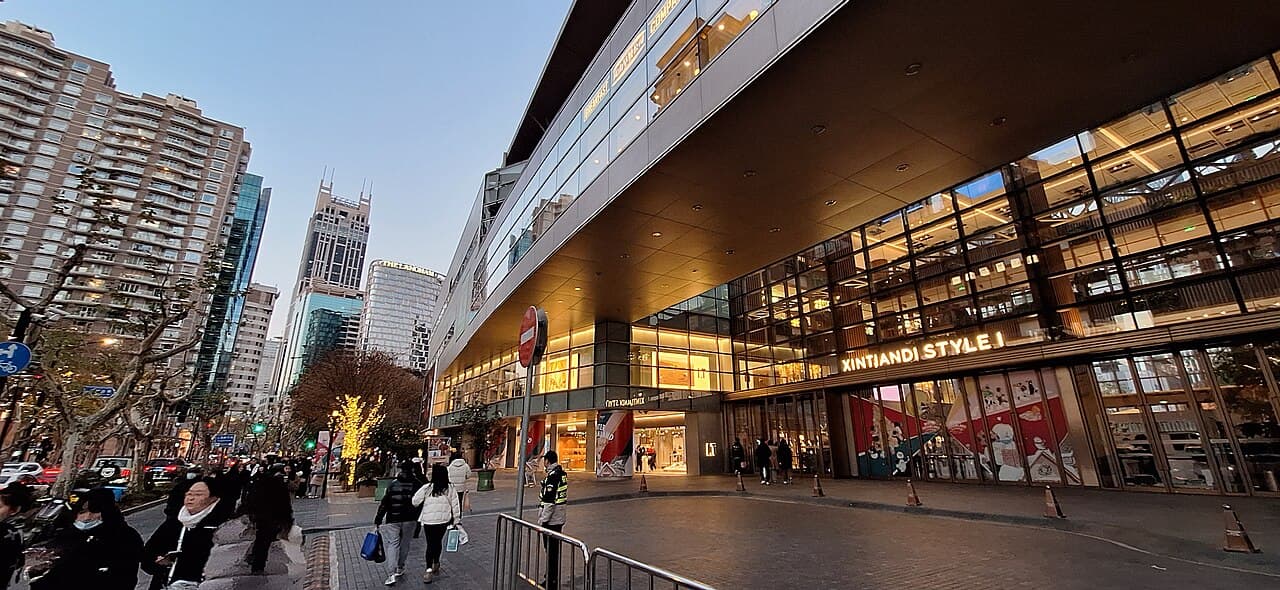
The official Shanghai tourism page describes Xintiandi as a project that preserved characteristic early twentieth-century shikumen architecture while changing former residential functions into dining, shopping, culture and entertainment. It is therefore useful for seeing the visual language of lanes and stone gates in a highly managed commercial environment.
What Xintiandi cannot do alone is explain ordinary lilong life. Its present interiors and public spaces were shaped for a different use. Read the preserved and reconstructed relationships carefully, then compare them with a street where residential functions remain more visible from public space. This is not a judgement that one model is authentic and another false; it is a recognition that adaptive reuse changes circulation, access, tenancy and the meaning of a facade.
- Observe the lane and gate vocabulary.
- Remember that former homes now hold commercial uses.
- Compare with a less comprehensively adapted street.
03
Compare Tianzifang's mixed fabric
Tianzifang combines shikumen residences, courtyards, modern lane houses, Western-style buildings and preserved factory structures. Huangpu district's official account also ties the area to studios and creative work. This mixture is why it feels less uniform than Xintiandi and why a single architecture label is inadequate.
Follow the public alleys slowly and look for changes in width, building material and ground-floor use. Commercial signs can obscure older fabric, while an attractive doorway may still serve residents or workers. Keep entrances open and do not assume a lane leads to a public courtyard. The most useful comparison with Xintiandi is not which is better; it is how two areas reused historic fabric through different patterns of planning, commerce and community participation.
- Look for factories, houses and studios in the same fabric.
- Distinguish public alleys from private thresholds.
- Compare adaptation models, not photo popularity.
04
Use Nanchang Road as an architecture lesson
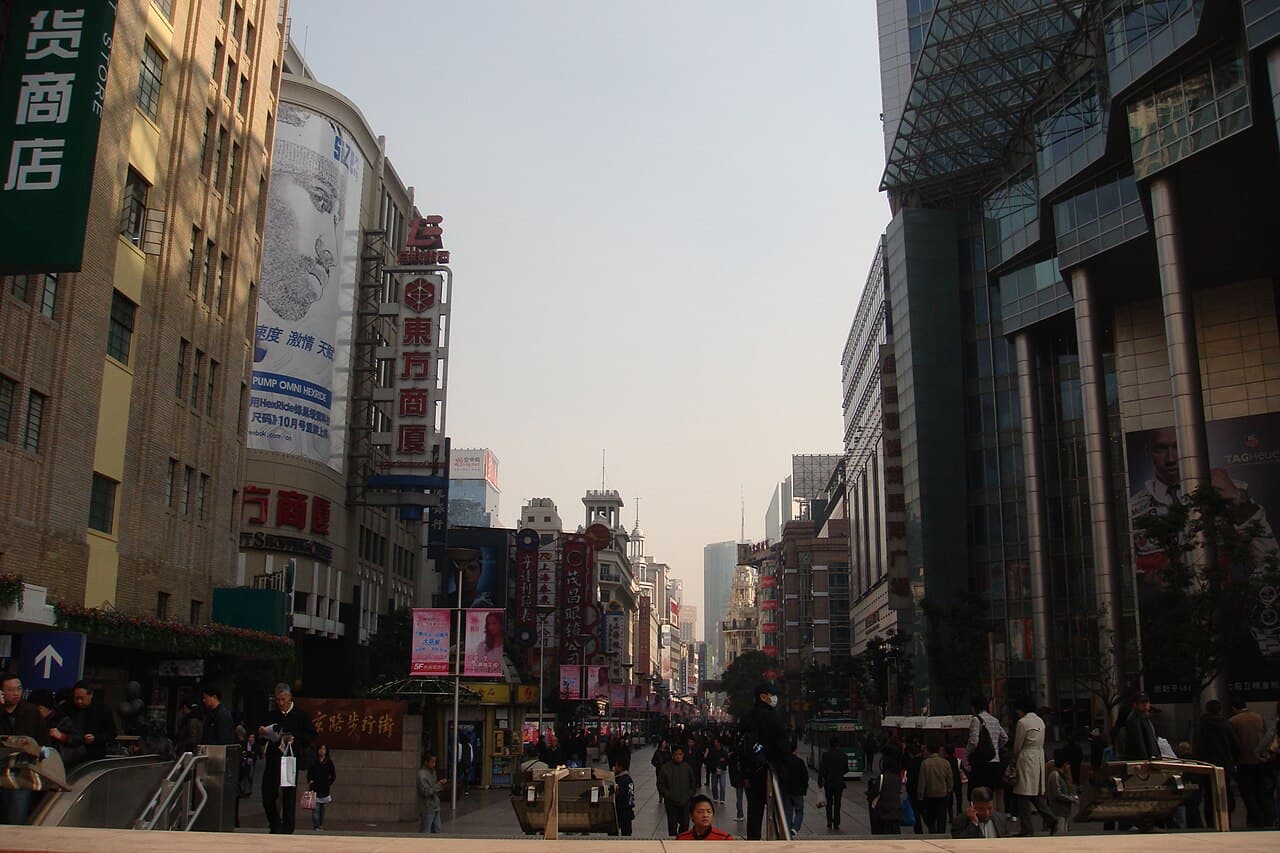
Nanchang Road offers a compact lesson in why labels matter. The official heritage feature identifies Joffre Terrace as 1924 lilong and shikumen architecture, then describes the 1933 Nanchang Building as Art Deco with geometric details. It also discusses apartment groups assembled in different periods. These are neighbouring but distinct forms.
Choose two buildings from the official route and compare entrances, rooflines, facade geometry and the relationship between shops and upper floors. Avoid inventing architects or resident stories for unlabelled buildings. Official plaques and heritage pages are better guides than social captions. The goal is not architectural connoisseurship after one walk; it is a more disciplined habit of seeing evidence before assigning a style.
- Compare one lilong group with one apartment building.
- Use visible features before applying a label.
- Leave unattributed buildings unattributed.
05
Recognise Wukang Road's different scale
Wukang Road's municipal profile describes multi-family residential buildings, modern lane houses and a series of garden villas. Its examples include British-influenced, Neoclassical, Art Deco and Mediterranean features. The larger plots, setbacks, walls and vegetation create a different street rhythm from the tight commercial alleys of Tianzifang.
Use the official addresses as visual anchors, but remember that many buildings remain residences or have limited public access. A facade can be appreciated from the pavement without entering a gate. Wukang Road also demonstrates why tree-lined or European-looking is not a sufficient style description: different roof forms, window patterns, materials and construction dates sit on the same street. Compare one or two documented examples rather than calling the entire road French style.
- Notice setbacks, walls and detached building forms.
- Compare documented examples instead of generalising the street.
- Stay in public space unless access is clearly invited.
06
Understand what protection does and does not mean
Shanghai's heritage regulations define protected areas by concentrated historical buildings, street patterns, spatial character and regional culture. They also allow active uses such as community service, cultural display, tourism and business when protection requirements and local lifestyles are respected. Protected does not mean frozen, empty or universally open to visitors.
Repairs, changed uses and new public functions can all affect what a visitor sees. A polished facade may be carefully restored; an apparently ordinary lane may retain a significant spatial pattern. Use official signs and documentation to understand status, and avoid claiming that a renovation reproduced an original condition unless the responsible body says so. This approach keeps the story grounded in preservation practice rather than nostalgia.
- Protection applies to patterns and settings as well as facades.
- Active contemporary use can coexist with heritage value.
- Restoration claims need an official source.
07
Build a two-district comparison
For a first comparison, pair Xintiandi with Nanchang Road: one shows comprehensive commercial adaptation, the other presents documented lilong and apartment examples along an ordinary street. Pair Tianzifang with Wukang Road when the question is density: tight mixed alleys versus villas, apartments and greener setbacks. These are editorial pairings, not official itineraries.
Use the metro for the cross-district movement and keep the street time unhurried. Select three documented buildings or lane groups in total, record the terms attached by official sources, and leave room to notice present-day use. Do not photograph people at close range without permission or stage groups in entrances. The best outcome is not a catalogue of facades but a clearer understanding of how housing form, commerce and preservation produce different public experiences.
- Xintiandi plus Nanchang Road: reuse and typology.
- Tianzifang plus Wukang Road: density and scale.
- Use three documented examples, not every attractive facade.
Useful answers
Reader questions
Are shikumen and lilong the same thing?
They overlap but are not identical. Shikumen is a stone-gate house type, while lilong refers more broadly to the lane-based neighbourhood form that can contain several building types.
Sources: Shanghai Municipal People's Government; Shanghai Municipal People's GovernmentIs Xintiandi an unchanged residential neighbourhood?
No. The official tourism page describes a preservation and redevelopment project that changed former shikumen residences into commercial, cultural and entertainment uses.
Sources: Shanghai Municipal Administration of Culture and TourismWhat makes Tianzifang different from Xintiandi?
Tianzifang's official profile emphasises a mixed fabric of residences, courtyards, factories, studios and several architectural types. Xintiandi reflects a more comprehensive commercial adaptation of shikumen blocks.
Sources: Shanghai Municipal People's Government; Shanghai Municipal Administration of Culture and TourismCan visitors enter the historic houses on Wukang Road?
Do not assume so. Many are residential or have specific current uses. Observe from public space and enter only where the venue or occupant clearly provides public access.
Sources: Shanghai Municipal People's Government; Shanghai Municipal People's GovernmentRead the evidence
Sources and further reading
These sources support the relevant sections above. Plans and comparisons are editorial suggestions. Check operators for current arrangements.
- XINTIANDI ↗Shanghai Municipal Administration of Culture and Tourism · Accessed 14 September 2026
Xintiandi's shikumen preservation, early twentieth-century architectural context and conversion from residential to commercial and cultural uses.
- Tianzifang ↗Shanghai Municipal People's Government · Accessed 14 September 2026
Tianzifang's mixture of shikumen residences, courtyards, factories, modern lanes, studios and creative-community history.
- Wukang Road ↗Shanghai Municipal People's Government · Accessed 14 September 2026
Wukang Road's multi-family buildings, modern lanes, villas and documented British, Neoclassical, Art Deco and Mediterranean examples.
- Explore the timeless charm of Nanchang Road ↗Shanghai Municipal People's Government · Accessed 14 September 2026
Joffre Terrace as lilong and shikumen, Nanchang Building as Art Deco and nearby apartment groups and conservation work.
- Regulations of Shanghai Municipality on the Protection of Historical-feature Areas and Excellent Historical Buildings ↗Shanghai Municipal People's Government · Accessed 14 September 2026
Definitions of protected areas and streets, criteria for historic buildings and the principle of active use that respects local lifestyles.