Yuyuan is easiest to understand when three places are separated. Yuyuan Garden is the ticketed classical garden, originally created as a Ming-dynasty private retreat. The City God Temple is a neighbouring religious institution. Yuyuan Garden Malls form the surrounding commercial landscape of shops, food, bridges and public lanes. Official descriptions explain that the three are connected, but they are not one attraction with one entrance or one set of rules.
The garden itself compresses pavilions, water, rockwork, walls, corridors and framed views into a relatively small area. Outside, the Old City story includes long-running temple-market activity, lane housing and continuing urban renewal. This feature shows how to read those layers without presenting a festival, night tour, ticket price or opening time as permanent. Check Yuyuan's official visitor page for current entry arrangements before going.
At a glance
Start here
- Separate the garden, temple and malls in your plan.
- Read the garden through sequences of water, rock, architecture and framed views.
- Treat the surrounding district as a changing commercial and residential landscape.
- Use the official Yuyuan page for current tickets, entrances and hours.
01
Start with three connected places
The municipal scenic-spot page places Yuyuan Garden beside the City God Temple and connects both to Yuyuan Garden Malls. It describes a combined area of garden visiting, temple activity, folk traditions, shopping, dining and cultural life. That connection explains why a map search for Yu Garden can drop a visitor into a dense commercial district before the garden entrance is obvious.
Plan each layer separately. The classical garden has its own ticket and entrance rules. The temple has its own religious function and visitor conditions. The malls and public lanes contain businesses with individual hours. Decide which is the anchor and which are surrounding context. A visitor interested in landscape design should protect garden time; someone interested in urban commercial culture may spend longer outside without pretending the market lanes are part of the historic garden interior.
- Garden: ticketed heritage landscape.
- Temple: separate religious institution.
- Malls and lanes: surrounding commercial district.
02
Understand the private-garden origin
Official city sources date Yuyuan to the Ming dynasty and identify it as a private garden associated with the Pan family. A Shanghai government renewal history states that Pan Yunduan initiated construction in 1559 as a gift for his parents. That origin matters because the garden was designed as a cultivated retreat rather than as a modern public park or grand imperial axis.
Look for intimacy rather than scale. Rooms, courts and garden scenes unfold in succession, and the name is associated in the municipal profile with peace, health and pleasure for elders. Avoid repeating legends about individual stones or structures unless an official on-site panel supports them. The broader historical fact is strong enough: a private Ming garden survived, changed and later became a protected public heritage site inside a much larger modern city.
- Read Yuyuan as a private retreat in origin.
- Expect sequence and enclosure rather than a single grand vista.
- Use official interpretation for object-level stories.
03
Read the Jiangnan garden composition
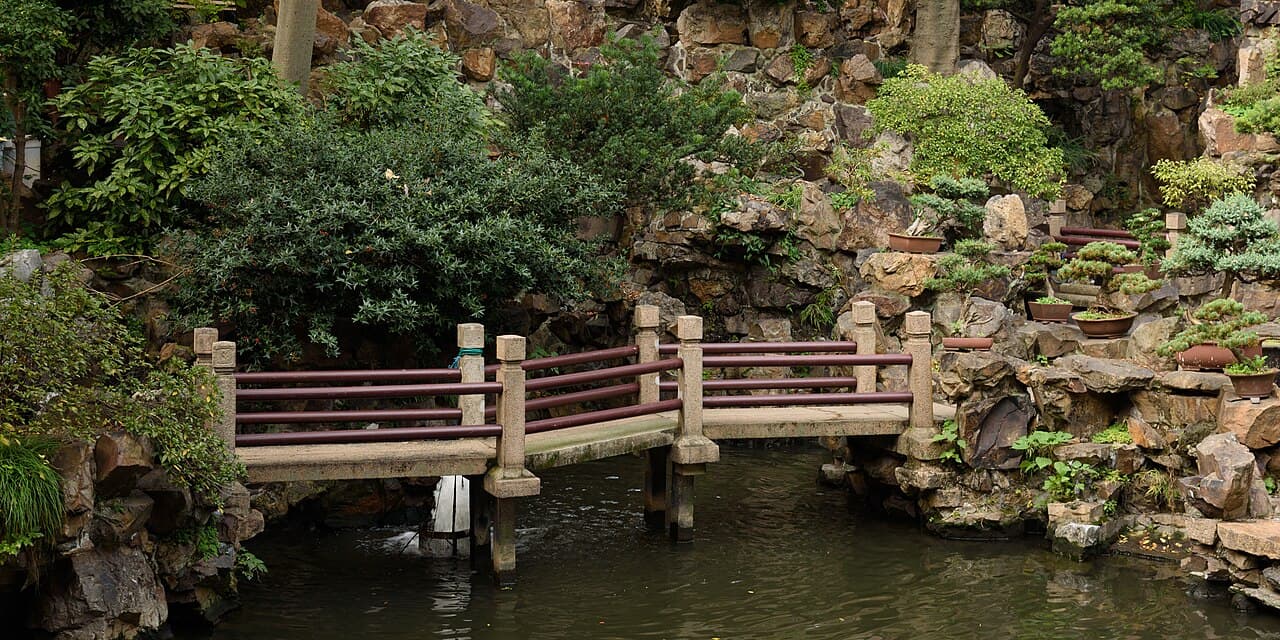
The official Jiangnan-gardens page describes Yuyuan as a compact composition of pavilions, water, rocks, bridges, dragon walls and traditional architecture arranged across six scenic areas. The useful idea is not to count features but to notice how they control movement and sight. A wall hides the next scene; a window frames a partial view; a corridor delays arrival; water makes a small space feel deeper.
Move slowly enough to see those transitions. Instead of photographing every pavilion, choose one sequence and trace how its floor level, opening, rockwork and reflection change the scene. Crowds can interrupt the intended reveal, but the design remains legible at edges and through framed openings. Do not climb, touch or leave the marked visitor route to improve a photograph; follow the garden's current on-site rules.
- Notice what each wall conceals and reveals.
- Use windows and doors as deliberate frames.
- Follow the current marked route.
04
Place Huxinting in the outside sequence
Huxinting, the Mid-Lake Pavilion by the zigzag bridge, belongs to the famous public-facing scene outside the ticketed garden. The 2025 official night-tour report documents its protective restoration and reopening and explains that the pavilion contains tea and heritage interpretation. Its presence helps explain how garden imagery, commerce and public gathering overlap around Yuyuan.
Do not assume a seat, performance or night programme will be available. Those are operating details that require a fresh check. The useful architectural reading is stable: the pavilion, water and bridge create a threshold between surrounding market activity and the garden precinct. Visit the public scene before or after the interior garden, but keep the two experiences distinct in notes and photographs.
- Treat Huxinting and the zigzag bridge as outside the garden ticket sequence.
- Verify tea-house access and programmes directly.
- Use the space to read the overlap of commerce and garden imagery.
05
Read the market layer without confusing age
The commercial district around Yuyuan draws on a long temple-market history, but not every building that looks traditional is an untouched Ming structure. Shanghai's official renewal history describes major twentieth-century mall expansion and continuing redevelopment around preserved lane buildings. The result is a designed mixture of old fabric, reconstruction, commercial architecture and contemporary retail.
Use plaques and official sources to distinguish a protected historic building from a newer facade in a traditional vocabulary. The market remains valuable even when a structure is recent: it records how the Old City is represented and used today. Avoid vague claims that a shop or snack has operated for centuries unless the business or heritage authority documents that exact continuity. Let the district's proven history carry the story without manufacturing antiquity.
- Traditional-looking does not automatically mean Ming-era.
- Check plaques for protected buildings and dated restorations.
- Do not invent continuity for shops or dishes.
06
Acknowledge renewal and residential change
The Old City is not an empty historic stage. Shanghai's published renewal account describes former lane neighbourhoods, household relocation, preserved buildings and plans for new commercial and cultural uses around the Greater Yuyuan area. That process makes the district a living urban-renewal case as well as a visitor attraction.
A responsible reading holds two truths together: preservation can retain structures and public memory, while changed tenancy and use alter the social landscape. Visitors do not need to judge a complex project from one walk, but they should avoid language that erases residents or presents redevelopment as timeless tradition. Observe what is clearly old, restored, new or under construction, and use the official planning record for claims about intended future use.
- Recognise former and remaining residential functions.
- Distinguish preservation of fabric from continuity of use.
- Label future projects as plans.
07
Build a layered visit, not a single queue
Begin by confirming the garden's current official hours, ticket channel and entrance. Inside, choose one landscape theme such as framed views or rock-and-water composition. Outside, inspect Huxinting and the bridge, then take one short public-lane loop to observe the market and renewal layers. The sequence is an editorial proposal and should change with current access.
If the garden queue or ticket conditions do not fit, do not imply that the surrounding malls are an equivalent substitute. They answer a different question. Use the outside district for urban-commercial history and return to the garden only under valid admission. Likewise, a night tour or lantern programme should be added only after an official dated announcement. Yuyuan rewards precise distinctions: private garden, religious neighbour, public market and renewing Old City can share a district without becoming the same thing.
- Confirm garden entry first.
- Choose one interior design theme.
- Add one outside loop for market and renewal context.
Useful answers
Reader questions
Are Yuyuan Garden and Yuyuan Garden Malls the same place?
No. The ticketed classical garden sits within a larger district that includes the neighbouring City God Temple, commercial malls, public lanes and the Huxinting bridge scene.
Sources: Shanghai Municipal People's Government; Shanghai Yuyuan Garden AdministrationIs everything around Yuyuan from the Ming dynasty?
No. The garden has Ming origins, while the surrounding district includes later historic buildings, restored fabric, twentieth-century commercial expansion and current renewal projects.
Sources: Shanghai Municipal People's Government; Shanghai Municipal People's GovernmentWhere should I check current Yuyuan tickets and hours?
Use Yuyuan Garden's official visitor page or its named official mini-program. The page publishes current entrances, hours, ticket routes and concession conditions.
Sources: Shanghai Yuyuan Garden AdministrationIs a Yuyuan night tour always available?
Do not assume so. Night programmes are dated products with their own operating calendar and tickets. Add one only after checking a current announcement from Yuyuan Garden.
Sources: Shanghai Municipal Administration of Culture and Tourism; Shanghai Yuyuan Garden AdministrationRead the evidence
Sources and further reading
These sources support the relevant sections above. Plans and comparisons are editorial suggestions. Check operators for current arrangements.
- Yuyuan Garden ↗Shanghai Municipal People's Government · Accessed 14 September 2026
Ming private-garden origin, protected status, principal landscape elements and connection with City God Temple and Yuyuan Garden Malls.
- Visitor Guide ↗Shanghai Yuyuan Garden Administration · Accessed 14 September 2026
Current official ticket channels, entrances, opening information, admission categories and contact details.
- Exploring Shanghai's Jiangnan-style gardens ↗Shanghai Municipal People's Government · Accessed 14 September 2026
Yuyuan's Pan-family origin, compact area, six scenic sections and composition of pavilions, water, rocks, bridges and walls.
- Yuyuan Garden unveils new tour experience ↗Shanghai Municipal Administration of Culture and Tourism · Accessed 14 September 2026
Huxinting restoration and reopening, its interpretive uses and the dated, separately ticketed nature of night-tour programmes.
- Massive renewal project launched for city's iconic Yuyuan Garden Malls ↗Shanghai Municipal People's Government · Accessed 14 September 2026
Pan Yunduan's 1559 garden project, temple-market history, twentieth-century mall expansion, lane preservation, household relocation and planned Greater Yuyuan renewal.